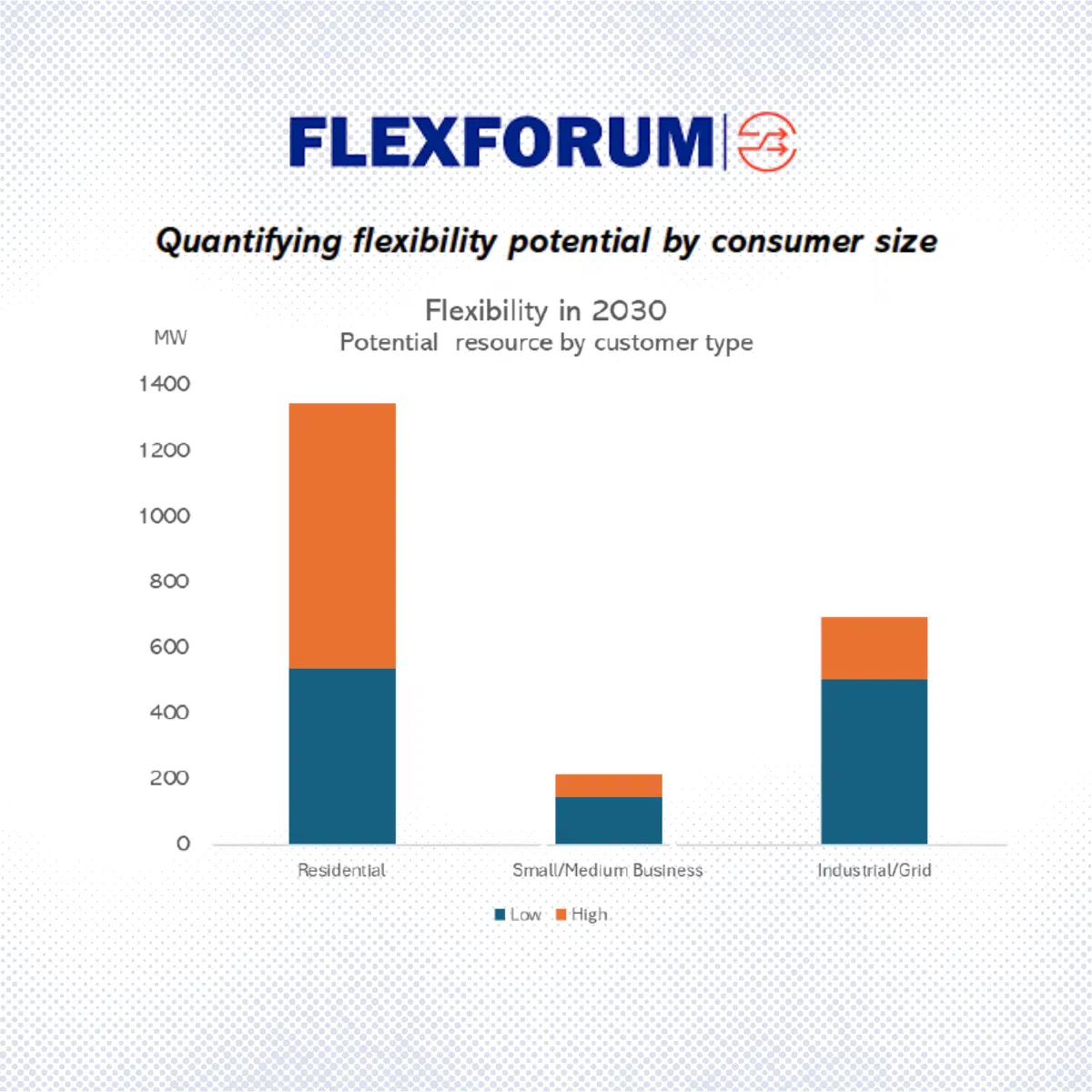
Flexibility is expected to have a bigger role in the system and in everyday household and business activities as an extra tool to efficiently keep the lights and everything else on, and as a way for people to lower their emissions, improve their reliability and resilience and reduce their electricity costs.
This is the first of a series of thought pieces laying out a FlexForum view of the role of flex in the power system and start to build some agreed facts about the role of flex in the power system of tomorrow, next year and next decade, to provide a robust foundation for deciding where to direct our efforts and scarce resources.
Our starting point is: How much flex is in the system now? How much could there be? Knowing what resources are on hand is a big step towards harnessing their potential for the benefit of the system, the economy and people.
Unfortunately there is no inventory of flex in the system. Our estimates of flex in the system today, and what could be in the system in 2030, are a sophisticated back-of-the-envelope calculation using imperfect data. Reality will, of course, be different from the estimates. Even so, the figures offer a useful guide to the merits of unlocking the potential of our growing stock of flexible resources.
Useful insights from understanding flex today and in 2030
Why we think flex matters
Flex is part of the solution to many of the challenges and changes confronting the power system and preventing a sustainable, resilient and reliable and efficient electricity supply. Importantly using flex efficiently will improve the productivity use and production and contribute to economic growth.
We need to take steps to ensure flexible resources are available to the system to be deployed at the right times for the right reasons. Doing so is an opportunity to materially improve the system’s ability to deliver the sustainability, reliability, resilience and cost outcomes that people want (and expect).
But what are these so-called opportunities? What specific jobs can flex do? What is this value? Who pays? Who benefits? These questions are the focus of our next article on the role of flex in the power system.
You can check out the article, including the assumptions and method for our estimates here.
And get in touch if you have better data or better estimates.