The Queenstown Electrification Accelerator (QEA) aims to build the 2050 energy system by 2030, creating a real-world blueprint on how to lower emissions while delivering lower bills and more energy resilience.
The QEA is working on a range of projects, from the country’s largest Vehicle To Grid trial with EECA, to a national solar for renters trial, community charging network blueprint, and individual business accelerator pathway to help guide businesses through how they electrify everything from bus fleets to bakeries. The community-led initiative is supported by Ara Ake, Central Lakes Trust, Destination Queenstown, EECA, Queenstown Lakes District Council and Rewiring Aotearoa.
The QEA is exploring ways to leverage flex to achieve a smart, right-sized power system (reducing power bills) and to make the local power system more earthquake resilient.
The 110kV transmission line from Cromwell to Frankton, which provides Queenstown with most of its electricity, is running out of spare capacity. The line can supply peak usage of 108MW, but forecasts indicate capacity will run out sometime between 2029 and 2032. There is also a high chance of a major earthquake along the Alpine fault line in the next 50 years, which could cut off power and fuel delivery for several months.
Energising Queenstown (Aurora Energy, PowerNet and Transpower) are investigating the construction of a new 110kV transmission line between Cromwell and a new substation at Arrow Junction. This option is expected to increase transmission capacity by an extra 132MW, providing Queenstown with heaps of power to grow (and electrify). Timing of construction and commissioning has not been decided but if it is in place by 2032, power bills in the area would increase by $360-$450 a year.

Existing Queenstown transmission line.
To meet peak winter demand in the area, especially when supply security is variable due to seasonal generation patterns, the region requires a diverse, resilient mix of energy options. While traditional infrastructure has historically been the answer, flex resources are now a practical, cost-effective way to manage load and secure Queenstown's energy future.
Research conducted for Aurora Energy shows that it is possible to defer the need for a new transmission line if strong growth in solar and battery storage can be implemented. Although the timing of construction and commissioning of the line is not decided, or certain, flexible resources - efficiently deployed - could defer need for the line by 3-7 years under the high and mid growth scenarios. For example, a 2-4 year deferral would require approximately 6,000 households to install 5kWs of solar and around 25kWhs of battery storage per household. Greater focus on peak demand management could offset the quantity of solar and battery storage required and/or create an additional 1-3 years of deferral, e.g. shifting the time of EV charging into the night or when solar is generating will slow peak demand growth. This scenario would save everyone money, but the flex resources need to be developed and installed
Achieving this requires a dedicated community effort. Work is underway by both QEA and Energising Queenstown to establish what the best mechanism is to encourage more flex such as solar and batteries.
Aurora Energy is currently seeking flexibility services to expand the scale and scope of flexibility in the region. They are looking for service providers who can reliably inject support to the network during peak times or unplanned outages, as well as commercial or industrial businesses that can reduce demand on request. Interested parties can register their interest on the Aurora website. The indicative duration of need for flexibility services is up to 7 years for Queenstown suburbs which aligns with the timeline for the transmission line build (subject to change).
While flexibility is the priority where cheaper, a new transmission line remains a likely long-term necessity due to the region's rapid growth. The region needs to be prepared by undertaking design and consenting work, while working out how to quickly increase the stock of flex resources in the region. This approach not only manages costs but also strengthens energy resilience.
The QEA is deploying several projects, as mentioned above, to fast-track flexibility solutions. The projects are at differing stages, and status updates are provided where available.
This initiative aims to test if V2G technology can lower household bills, reduce strain on the network at peak times and provide backup power in the case of an emergency.
These key research questions informed the trial:
Status: Registration open; first charging deployment soon; 18 months of monitoring (to mid/end 2027).
Status: Open to register interest
Status: To be deployed soon.
Status: To date they have supported businesses like Snow Farm, iFly Queenstown and Queenstown Ice Arena. Businesses can get in touch or read the ‘how to guides’.
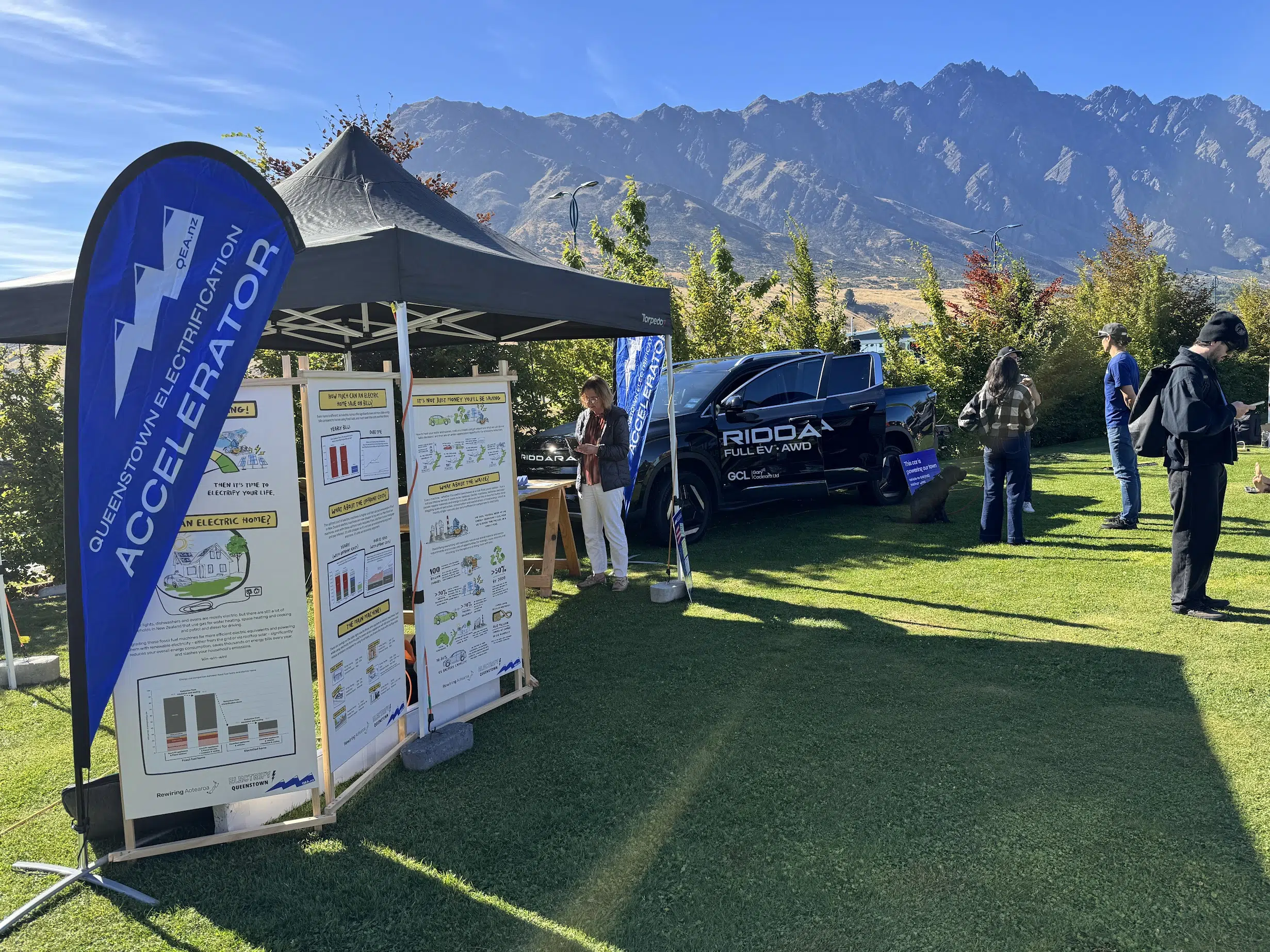
Community activation held by the Queenstown Electrification Accelerator
The scope of activities underway in Queenstown means progress is being made on multiple steps in the Flexibility Plan. For simplicity, we identify three here: